
Behind the 25 Percent
What It Really Takes to Make Innovation Work

I want to begin with why I wrote this piece in the first place. I have known both Shahi and Fibre52 for a few years now, not as distant names in a press release, but as teams I have spoken with, listened to, questioned, and watched up close as they have tried to move from ambition to implementation. Over time, I have seen enough of both sides to know that this collaboration was not simply a neat sustainability story waiting to be packaged. It sat between two serious attempts to make innovation real: an innovator trying to build a chemistry that could survive the reality of factory production, and a manufacturer willing to test whether its own systems could make room for something better without pretending the transition would be easy. That is why I wanted to write about it in this form. Not as an announcement, not as a celebration, and not as another polished case study, but as an attempt to understand what actually happens when trust, technical uncertainty, operational discipline, and long term vision are forced to share the same production floor.

Someone on one side of a phone call has to decide whether to say what they actually think. That is where a collaboration stops being an arrangement and starts becoming a working relationship. A trial batch came back wrong. The whiteness index is off again. The recipe that worked last time produced nothing this time. And the person on one end of the call has to decide, in real time, whether to be honest about what they think went wrong, or to manage the conversation in a way that keeps everyone comfortable while something essential remains unresolved.
That decision, small as it looks from the outside, is the real beginning of most meaningful innovation stories. It is also the part almost never included in them. Public announcements tend to arrive after the uncertainty has been cleaned away, after the failed batches have been converted into learning, after the awkward conversations have become invisible. They tell us that a supplier has partnered with an innovator, that a new technology has been validated, that a commercial commitment has been made. What they rarely show is the slow accumulation of trust, evidence, operational disruption, disagreement, recalibration, and mutual risk that made the announcement possible in the first place.
I wanted to bring that hidden work closer to readers by taking you behind the scenes of how such collaborations actually move from promise to production. So I spent time with the Shahi team and the Fibre52 team to understand how their two years together actually unfolded. Shahi is one of India’s largest vertically integrated apparel manufacturers. Fibre52 makes a cotton pretreatment chemistry designed to reduce the chemical, energy, water, and processing burden of conventional cotton preparation while improving the performance characteristics of the finished fabric. At the end of those two years, Shahi committed to incorporating the technology across 25 percent of its knit production. This was not a pilot allocation, but a structural decision about how a significant portion of its manufacturing would run. What produced that outcome is worth understanding in some detail, because the public version of the story, accurate as it is, cannot carry the texture of what it actually took.
To understand why the collaboration worked, it helps to begin before Fibre52 entered the picture at all. The default assumption about large manufacturers is that they are passive in this regard, waiting for brands to surface innovations and instructions to follow. Shahi operates differently. They have built a layered intelligence network that treats innovation discovery the way a fund manager treats portfolio construction: deliberately diversified, with each channel chosen for what the others miss. Fashion for Good sits in that network as a textile specific partner, bringing sector knowledge and a stakeholder map that generalist channels cannot replicate. Alongside this, Shahi engages with accelerators, investors, and civil society organisations that each provide a different view of the innovation ecosystem. Some see early stage technologies before they are visible to the broader market. Some understand where capital is flowing and which categories are beginning to show commercial traction. Others bring insight into local industrial, social, environmental, or policy realities that a purely global scouting strategy would miss. Running these channels together is not hedging. It is how you avoid the particular blindness that comes from looking at a problem only through the lens of people who already know the industry.
That outward search also extends into the investment ecosystem, but not in the simple way people might assume. Investor conversations occupy a different place in Shahi’s network because they can offer a view of the innovation landscape that manufacturers cannot always access directly. These are not necessarily formal partnerships. They are relationships built on trust that help the ESG and Innovation team understand which categories are gaining traction, which companies appear to have credible paths to commercial scale, and where the industry’s funding is moving relative to where manufacturing adoption actually needs it. The exchange is not one sided. What Shahi can offer in return is something investors cannot easily get elsewhere: honest, operationally grounded feedback on what it means to integrate a technology into a large manufacturing business running under real commercial pressure. That kind of feedback changes how people think about the gap between what gets funded and what gets adopted.
Shahi’s approach to innovation discovery is therefore not simply about finding more options. It is about knowing where different kinds of answers are likely to come from, and making sure the search is not trapped inside one version of the innovation world.
But a wide search is only valuable if the organisation knows what it is looking for. This is where Shahi’s internal process becomes as important as its external network. Before engaging externally with any technology, Shahi defines the problem statement internally. Mill teams are in the room. Product development teams are in the room. Brand facing commercial teams are in the room. What comes out of that process is a clear and firm set of requirements: this problem, in this production context, to this performance standard, at this cost structure. The majority of available technologies cannot answer that question. They get set aside not because they are uninteresting but because they are answering a different question from the one currently on the table. The industry tends to read this kind of selectivity as conservatism. In practice, it is often what separates a manufacturer that can scale an innovation from one that is merely willing to look at many of them. The internal filter is what gives the external search a centre of gravity.

Technologies that clear that filter enter an evaluation system the Shahi team described as an ops model built from years of accumulated experience with what the journey from scouting to commercial scale actually requires at each stage. Technical and commercial due diligence sit within it, but some of the most important assessments resist neat categorisation. One of them concerns the innovator’s own stability. A manufacturer of Shahi’s scale retooling its processes around a new chemistry, retraining operators, and adjusting SOPs across multiple machine types cannot absorb the cost of discovering eight months later that the innovator has lost its funding runway and pivoted. The technology and the company behind it are both being assessed. The team’s experience, their understanding of what it means to become part of a supplier’s operating reality, their funding trajectory, and whether they have the resilience to stay present when scaling gets difficult all matter. This is not caution for its own sake. It is what procurement starts to look like when the supplier may become dependent on the solution.
Fibre52 cleared those filters, and it was not one thing that cleared them. The technology addressed the problem Shahi had already defined: reduce the chemical, energy, water, and processing intensity of cotton pretreatment, while also reducing the effluent treatment plant load. Beyond the technical fit, the Fibre52 team shared test reports and process details fully rather than strategically, which sounds like a basic professional courtesy and is rarer than it should be. The relationship building effort preceded the technical due diligence rather than following it, and the mill COO was included in early conversations, which matters because he was the person who would ultimately be accountable for making the technology work in production. Most innovators wait until they have an airtight evidence base before asking for that kind of senior engagement. The Fibre52 team understood that getting his read early was worth more than protecting themselves from scrutiny before they were ready for it.
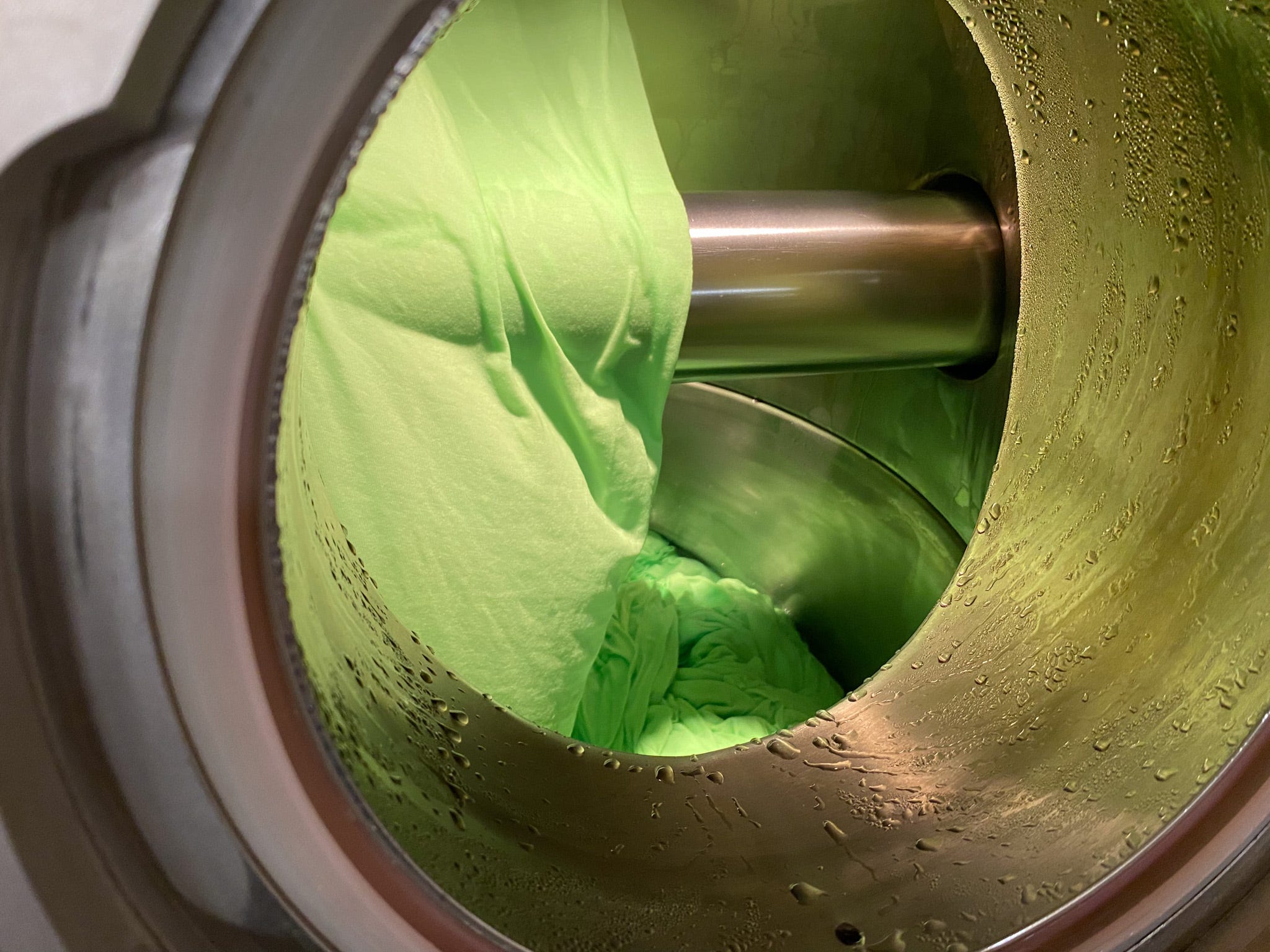
That early openness mattered because the trials did not always run smoothly. There were batches that came back inconsistent on whiteness despite following the same recipe that had worked the batch before. There were batches that simply did not perform, and the debugging required both parties to stay in the problem long enough to think through it rather than react to it. On at least one occasion, the issue turned out to be logistical. Chemistry can degrade in transit if storage conditions are not maintained. Degraded chemistry produces nothing regardless of how well the process is executed. When the Fibre52 team concluded this was what had happened, they said so directly and offered to restart with a clean batch. Shahi accepted. That conversation took a few minutes. What made it possible was months of accumulated trust, the particular kind that allows one party to say something uncomfortable and the other to receive it without defensiveness.
Part of what solidified that trust was a financial signal that came about a year into the collaboration. The early trials, including the first five metric tonne runs, had been supported by Fibre52 on the cost side. At a certain point Shahi made a different decision and began purchasing everything themselves. On the surface this is simply a commercial arrangement normalising. What it actually represented was Shahi signalling that the collaboration was no longer something they were doing as an accommodation to an innovator they were evaluating. It was something they were investing in. Both parties felt the shift. Fibre52 understood they had a partner. Shahi understood they had made a commitment that the rigour of their own process now needed to justify.

The credibility of that commitment was strengthened by another relationship sitting beside the collaboration. When Fibre52’s partnership with Archroma became visible, it told Shahi something that pilot data alone could not. Archroma is one of the largest specialty chemical businesses in the textile sector, and they had conducted their own assessment of Fibre52 before deciding to work with them. For a mill considering integrating a new chemistry into 25 percent of its knit production, supply chain reliability is not a secondary question. The fact that Archroma had looked at this technology and concluded it was worth a relationship functioned as independent corroboration of the technology’s commercial pathway, corroboration that the collaboration’s own data, generated by the two parties inside the relationship, was structurally unable to provide.
Still, credibility from the outside could only support the process. It could not carry it. Inside Shahi, the mill COO’s role across those two years was central, and it is one of the things the public account of this collaboration cannot really hold. The Shahi team described the mill COO as comfortable with a certain level of uncertainty, which is a precise observation and a significant one. When the innovation team was asking whether the evidence base from five metric tonnes was sufficient before moving to the next scale, he was willing to move. Not because he was dismissive of the uncertainty, but because he had read the direction of travel clearly enough to trust it. He was also the person who solved, repeatedly across two years, the operational problem of fitting trial runs into a production schedule with no slack in it.
That detail matters because it reveals the hidden cost of supplier led innovation. Finding gaps in the calendar where a trial requiring a full machine clean down can happen without disrupting active orders is not a problem that enthusiasm for the technology solves. It is a planning problem, and it presented itself again and again across a period during which the Fibre52 trials were running alongside evaluations of multiple other innovations at the same mill. The Fibre52 collaboration was one thread in a considerably more complex operational picture. Accounts that treat it as if it were the only thing happening miss what it actually cost in management attention and production planning to make it possible.
The same is true at the organisational level. Shahi’s Director of ESG and Innovation was involved from early in the process, and this changed the internal dynamics in ways that are easy to underestimate. In large organisations, innovations championed by middle layer sustainability teams but not yet visible to leadership have a particular vulnerability: they can be stalled or deprioritised by any function that has not yet been convinced, and the convincing has to happen separately with each one. When the person accountable for the company’s direction in sustainability and innovation is personally invested in a collaboration from the beginning, that vulnerability largely disappears. The alignment still has to be built, but it gets built through demonstrated progress and shared data rather than through political navigation of competing functional priorities. The ops model produces the data. Leadership involvement gives that data a clearer route through the organisation.
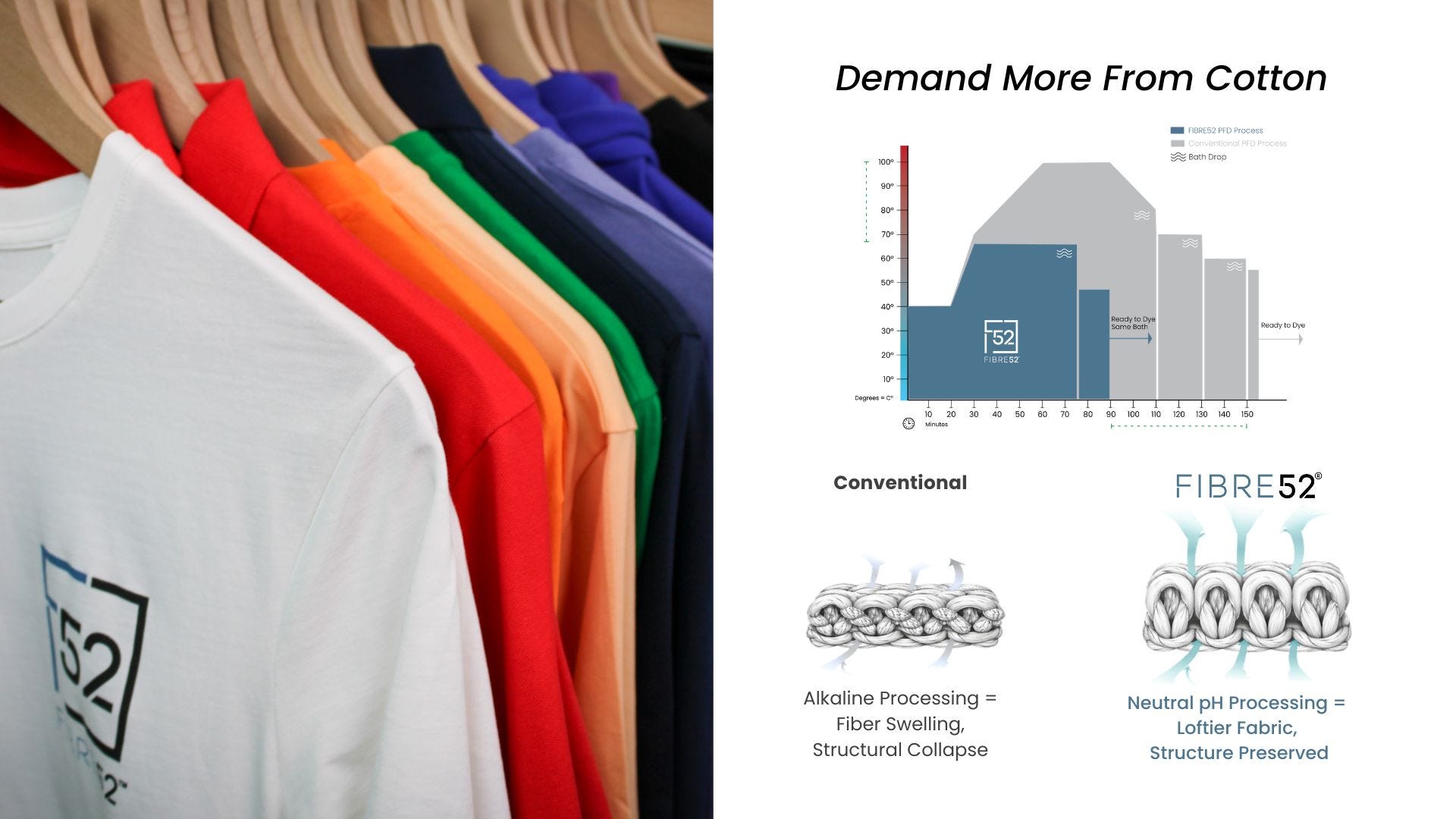
Even with that alignment, the collaboration still had to move from leadership conviction into factory practice. This is where the Fibre52 technology required a deeper mindset shift than the industry usually acknowledges, because it asked the mill team to evaluate cotton preparation through a different performance logic from the one operators are usually trained to trust. Conventional preparation for dyeing is optimised around two indicators that experienced operators have spent careers working toward: instant absorbency and high whiteness. These are not preferences or conventions. They are the parameters the downstream dyeing process is built to expect, and operators who consistently deliver them are doing their jobs exactly right. Fibre52’s process changes the relationship between preparation, absorbency, whiteness, fabric strength, and softness, which meant the team had to interpret familiar quality indicators in a slightly different way. Asking an experienced dyehouse operator to accept a lower whiteness reading as a positive outcome is not a technical conversation. It is asking someone to reinterpret the meaning of the numbers they have spent a career trusting, while knowing that if the batch does not meet specification there are real orders affected by it. The fact that this shift happened at Shahi without significant floor level resistance reflects the quality of the preparation that preceded the trials, and the clarity with which mill leadership communicated the direction they had chosen.
That leadership clarity shaped the progression through scale too, which was not a standard pilot protocol. Five metric tonnes to twenty to one hundred metric tonnes was an attempt to understand whether the technology could work as a core solution across the full range of their production, not just whether it could produce acceptable results under supervised conditions. That meant testing across the full range of colour shades, different GSMs, fabric constructions, and distinct machine types, each of which required its own recipe calibration. The SOP that emerged from that work had to hold up in everyday production, run by operators following a procedure rather than monitored by a project team. Getting there involved the kind of iterative, granular work that generates no headlines. It produces capability, which is a different thing from demonstration and takes longer.
This is also where Shahi’s contribution to the collaboration becomes impossible to treat as factory access alone. When Fibre52 had hypotheses about process parameters, Shahi tested them at a scale a smaller team without deep factory experience could not have accessed. When Shahi’s technical staff had observations about how the chemistry was behaving that did not match expected outputs, those observations shaped subsequent formulation iterations. There were process adjustments suggested by Shahi’s team, within the chemistry’s claimed performance range but not yet tested in that specific production context by Fibre52, that produced measurable improvements in bursting strength and fabric softness. Fibre52 brought the chemistry, the technical foundation, and the openness to keep refining how the process behaved under real mill conditions. Shahi brought the production environment, operator knowledge, and process observations that could only emerge at scale. What emerged was co creation in the truest sense: a final recipe shaped by Fibre52’s chemical expertise and Shahi’s manufacturing intelligence. Neither party could have arrived at the final output alone, and the improvement belongs to both of them.
That point matters because it challenges one of the industry’s most comfortable assumptions about adoption. The conventional model has brands endorsing or specifying a technology and suppliers adopting in response. Fibre52’s approach inverts this deliberately. The supplier buys the chemistry. The supplier controls the production. The supplier understands the machines, the operators, the quality requirements, and the commercial context the finished fabric has to perform within. A supplier who is genuinely comfortable with a technology and advocates for it to their brand partners is a more credible voice than the innovator making the same claim in a presentation, because the supplier has nothing to gain from overselling something they have to make work every day at production scale. The brand’s trust in the supplier’s judgment is already established in a way that the innovator’s trust with the brand is not. Adoption that follows from supplier conviction holds up differently from adoption that follows from a brand mandate attached to a specification the supplier had no role in generating.
The commercial logic of the technology is just as important as the adoption pathway. The Fibre52 process is designed to be cost neutral. Shahi’s move toward commercial commitment was supported by an internal cost comparison that factored in steam savings, water savings, and reduced effluent treatment load alongside improved fabric quality. The technology does not ask the manufacturer to carry a sustainability premium that their brands have not agreed to share. This is a more important design choice than it might seem. The industry is full of chemistry innovations that are genuinely better on environmental grounds but require the supplier to absorb a cost increment that sits in no one’s approved budget. Those innovations stall, and they stall not because the technology fails but because the commercial structure around them was designed without the supplier’s reality at the centre of it. The ones that scale are designed the other way around.
This does not mean brands are irrelevant. In this case, brands were not deeply involved in the development phase because the technology’s benefits accrued primarily to the production process rather than to the end product properties that brands usually specify. That made it viable for Shahi and Fibre52 to develop the capability first, then engage brands around the resulting offering afterward. For innovations that directly change what the finished product looks, feels, or performs like, brand involvement earlier in the process would be structurally necessary rather than optional. The lesson is therefore not that brands sit outside the innovation process. It is that the right moment for brand involvement depends on where the technology creates value, who carries the operational risk, and what part of the product or production system the innovation actually changes.
Large manufacturers work with multiple innovations simultaneously, and not all of them reach commercial commitment. Some arrive at a point where both parties have invested significantly but neither has quite enough evidence, or quite enough trust, to take the next step. The announcement of the Fibre52 collaboration was partly a message to those other companies: that the process Shahi runs is one that can go all the way, that the operational disruption and the time and the transparency the collaboration requires are not going into a system that ultimately withholds commitment.
The advice both teams offered to innovators approaching manufacturers of this scale follows naturally from everything that happened between them. The manufacturing industry’s processes are deep, and that depth comes from decades of hard learning about what works under real production conditions. The questions a mill asks before and during trials are not friction. They are how the trial gets its best chance of producing results that mean something at scale. Treating them as obstacles to be managed rather than intelligence to be gathered makes the collaboration harder and the results less reliable at the same time. The Fibre52 team’s specific counsel was to understand the consumer facing performance benefits of your technology alongside the sustainability benefits, because the mill team needs to be able to hold both arguments at once. The environmental case is why the investigation begins. The performance case is what allows it to conclude.
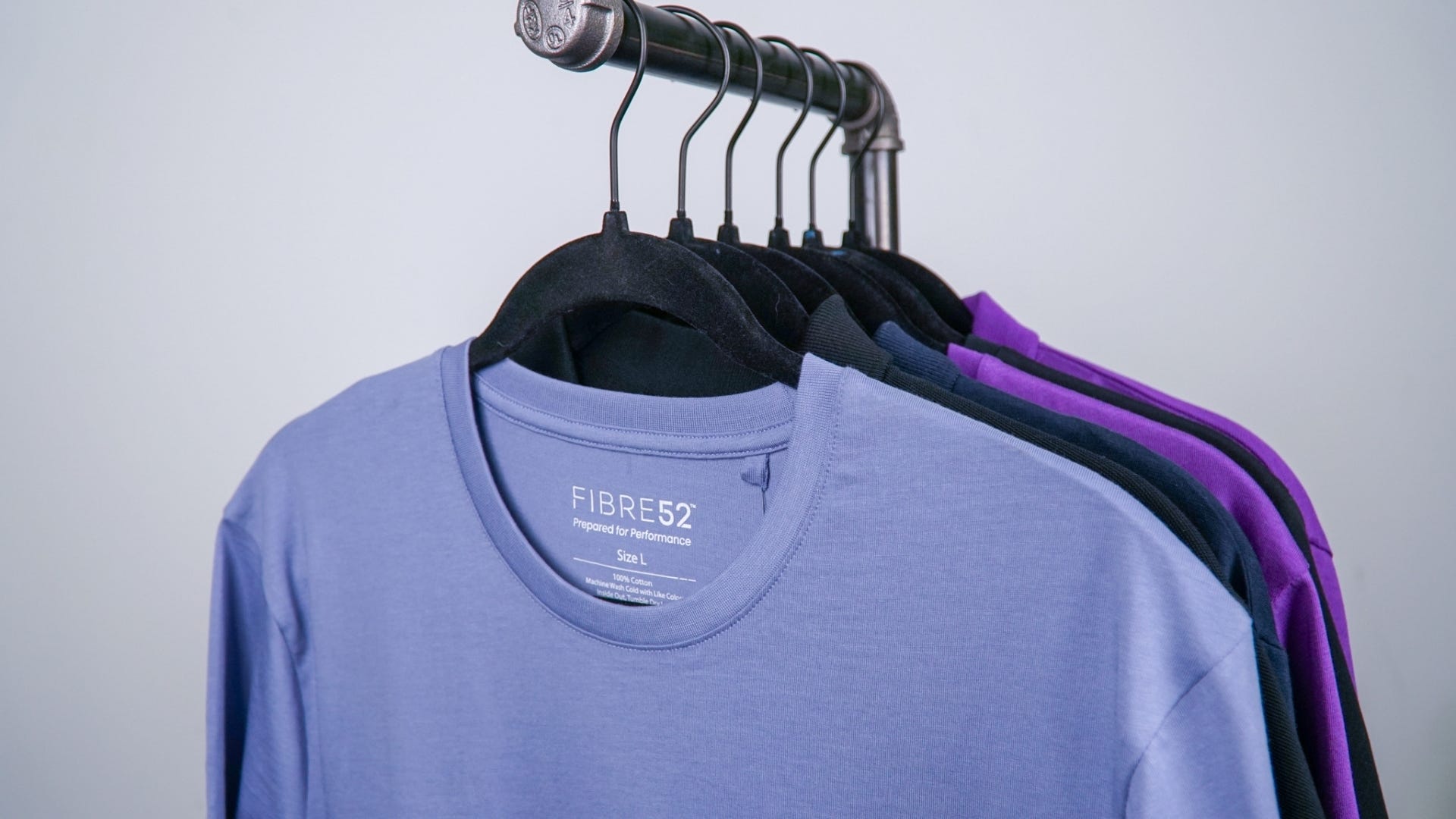
The consequences of that two year process are now visible beyond Shahi. Since the announcement, Fibre52 has seen a clear increase in interest from manufacturers across India, South America, China, and Vietnam. A successful integration at the scale and credibility of Shahi changes the nature of early conversations with new partners in ways that no pilot result achieves. What took two years at Shahi can now take around three months at new facilities, because the supply chain infrastructure, calibrated recipe parameters, refined process knowledge, and Archroma distribution agreement that developed alongside the Shahi work are all now in place. The two years were not the cost of being slow. They were what made being fast possible for everyone who comes after.
That is the part the industry most often gets wrong about collaboration. It celebrates the output while remaining vague about the input. The 25 percent knit production commitment is the output. The input is two years of a mill team absorbing operational complexity to make room for something they believed in before the evidence was complete; an innovation director whose personal investment meant the internal debate could centre on evidence rather than organisational politics; a sustainability team present on the factory floor when it mattered; a manufacturer that moved from receiving subsidised trial support to purchasing everything itself when the moment came to signal conviction; and two parties that stayed honest with each other through the batches that failed, the calls that ran long, and the moments when the easier thing would have been to manage the conversation rather than have it.
That input is what the industry needs more of. Not more ceremonial partnerships, and not more innovation language that loses meaning the moment factory reality enters the room. More of the conditions that allow suppliers and innovators to stay honest with each other long enough for promising technologies to become operational knowledge. Shahi and Fibre52 have shown that this kind of collaboration is possible. The question now is whether the industry is willing to build the structures that make it less exceptional, less fragile, and less dependent on two parties carrying the cost of patience alone.