
Threads in the Smoke

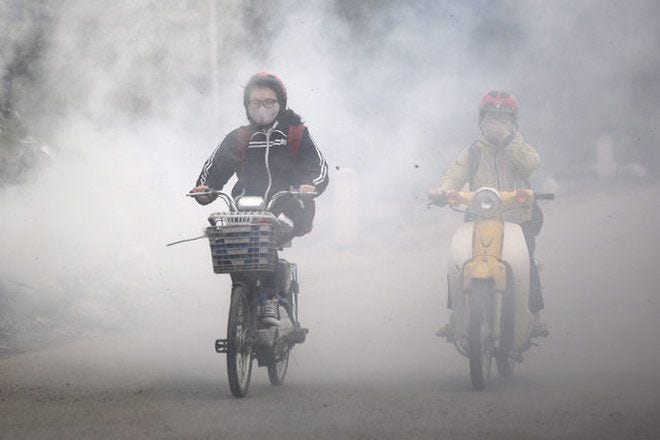
The modern discourse on microfibres has acquired a peculiar asymmetry. It is not defined by the scale of exposure, nor by the clarity of causal evidence, but by the psychological potency of the invisible. Over the past several years, a steady stream of headlines has announced the discovery of microfibres and microplastics in human blood, lung tissue, placental tissue, and more recently, within the brain itself. Each finding has been framed with an undertone of rupture, as though the human body has been breached by a fundamentally new class of intruder. Yet this framing misunderstands a more basic physiological reality. The human body exists in continuous exchange with its environment. Every breath carries with it a mixture of organic and inorganic material. Mineral dust, combustion byproducts, pollen fragments, metallic particulates, and a wide spectrum of environmental debris routinely enter the respiratory system. The role of physiology is not to maintain absolute exclusion, but to manage, clear, and adapt to constant exposure. Detection, therefore, is not equivalent to dysfunction. Presence alone does not define risk. It merely confirms that a pathway of entry exists. The discovery of microfibres within biological tissue should be understood within this broader continuum of environmental exchange, not as an isolated anomaly detached from the far larger particulate burden that humans have always encountered.
This distinction becomes critical when exposure is evaluated not symbolically, but quantitatively. The respiratory system does not differentiate between particles based on their narrative relevance. It integrates total particulate load over time. What matters is not whether a particle originated from a garment, a vehicle exhaust plume, a construction site, or combustion. What matters is how much of it enters the body, how frequently, and under what concentration conditions. Yet contemporary discussion of microfibres often proceeds in isolation, detached from the baseline particulate environment within which they exist. This creates a distorted frame of reference. Microfibres are discussed as a standalone threat, rather than as one component within a vastly larger particulate ecosystem that dominates human inhalation exposure.
This realisation emerged for me not through formal experimentation, but through a simple thought exercise grounded in physical reasoning. I began by considering an ordinary, everyday scenario. A person sits inside a room in a densely populated urban environment with elevated air pollution. Within that room, particulate matter originates from two pathways. The first is the infiltration of ambient air pollution from outside, driven by the persistent presence of suspended particulates generated by transportation, industrial activity, energy systems, and resuspended dust. The second is the gradual release of microfibres from textiles present within the room, including clothing worn by the individual and other household fabrics. Both pathways operate simultaneously. Both contribute particles to the same confined air volume. Both rely on the same mechanism of entry into the human body, through inhalation.
By assigning physically reasonable values to the defining parameters of this system, including air volume, ventilation rate, inhalation rate, ambient particulate concentration, and fibre release dynamics, it becomes possible to estimate the relative magnitude of each pathway. The objective of the exercise was not to produce an exact value, but to understand scale. To determine, even approximately, whether microfibres represent a dominant contributor to inhaled particulate burden, or whether they exist as a comparatively minor component within a much larger exposure landscape. The outcome of this reasoning was unambiguous. Even under assumptions that did not minimise fibre release, the magnitude of particulate load entering the respiratory system from ambient urban air pollution exceeded that from microfibre shedding by roughly two orders of magnitude (100x). The precise ratio will vary depending on geography, indoor conditions, textile composition, and environmental concentrations. But the directional conclusion remained robust across reasonable assumptions. The dominant determinant of inhaled particulate exposure, particularly in polluted urban environments, was not microfibres derived from textiles, but the persistent background of airborne particulate matter generated by combustion and industrial activity.
However, exposure alone does not define risk. Risk emerges from the interaction between exposure and hazard. It requires not only the presence of a contaminant and the magnitude of its entry into the body, but also its biological activity once inside. In the case of conventional air pollutants, this relationship has been studied extensively over decades. There exists overwhelming epidemiological and mechanistic evidence linking inhalation of particulate matter from combustion and industrial sources to cardiovascular disease, respiratory illness, neurological impairment, and premature mortality. Millions of deaths globally are attributed each year to sustained exposure to elevated particulate concentrations. The hazard profile of these pollutants is not hypothetical. It is established, quantified, and reflected in observable population level outcomes.
By contrast, while the presence of microfibres in the body has been demonstrated, the hazard profile associated with typical inhalation exposure remains far less defined. This thought exercise allowed examination of exposure magnitude, but it does not by itself resolve the downstream biological response. The human body is not a passive reservoir. It possesses layered defence mechanisms, including mucociliary clearance, macrophage mediated phagocytosis, and other physiological processes that continuously trap, transport, and remove contaminants. The extent to which microfibres are retained, translocated, or cleared remains an active area of investigation. Total exposure, in its true biological sense, is therefore not defined solely by inhalation volume, but by the fraction that persists and interacts with tissue over time. That internal dimension remains incompletely characterised, not only for microfibres, but for many classes of inhaled particles.
Hazard in the context of microfibres is also highly dependent on composition. Textiles are not chemically uniform entities. They may contain residual monomers, dyes, finishing agents, plasticisers, and other functional chemistries, each with its own toxicological profile. In certain cases, these chemistries can indeed present meaningful hazards. But where such hazards exist, the dominant pathway of exposure may not be inhalation of detached fibres, but direct and prolonged contact between the textile surface and the skin. Dermal exposure occurs over a vastly larger contact area and over sustained durations. In comparison, inhalation of the small fraction of fibres that become airborne represents a comparatively constrained exposure pathway. This distinction does not eliminate the need for scrutiny. It reinforces the importance of evaluating risk within the context of realistic exposure magnitude and dominant pathways.
What this thought exercise ultimately provided me was a clearer sense of proportionality, at least within the bounds of the assumptions I was working with. It does not dismiss microfibres as irrelevant, nor does it claim that their biological effects are fully understood. It demonstrates that exposure magnitude, when grounded in physical reasoning, places microfibres within a broader hierarchy of inhaled particulate sources. It suggests that the overwhelming majority of inhaled particulate burden in polluted environments originates from conventional air pollution sources whose hazards are already well established and whose health impacts are already manifest at scale. This has implications not only for scientific research, but for how urgency is allocated. If the objective is to reduce human harm, then interventions must be prioritised in proportion to their contribution to total risk.
I would be glad to share the structure, assumptions, and methodology with anyone interested in expanding this line of inquiry, and I would welcome collaboration in developing it further. The goal is not to minimise emerging concerns, but to situate them within the physical and biological reality of human exposure. Only by aligning perception with magnitude can scientific attention remain focused on the pathways that matter most.