
When the Keel Breaks

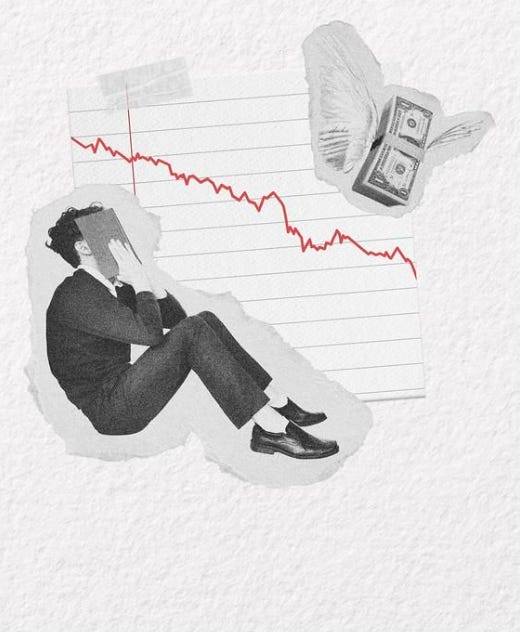
On 5 June 2026, Keel Labs filed a voluntary Chapter 11 petition in the Eastern District of North Carolina. Court records list assets between $1 million and $10 million and liabilities between $100,001 and $1 million. The company, formerly known as AlgiKnit, was founded in 2017 and had raised significant venture backing over its lifetime, including a $2.2 million seed round and a $13 million Series A from investors including Collaborative Fund and H&M CO:LAB. Recent reporting also points to a landlord lawsuit as part of the immediate pressure surrounding the filing. After roughly nine years of work, Keel Labs is now in bankruptcy protection.
Can we be honest about what this is now?
Not honest in the polished, conference panel sense of the word, where someone says “we need to do better” and receives a round of applause before everyone goes home. Honest in the way that the people who built these companies deserve. The people who spent years not drawing a salary, working out of shared lab spaces, flying economy to meetings with brands that were never going to buy anything at volume, rewriting pitch decks at midnight because the last round had not closed and the next payroll was two weeks away. The people who believed in what they were building because they had been told, repeatedly and by credible institutions, that the industry needed exactly what they were making. Those people deserve honesty, and what the industry has been giving them instead is a performance.
Keel Labs is not an isolated story. It is the latest entry on a list that the industry keeps processing as though each case were exceptional. Natural Fiber Welding announced an orderly wind down in September 2025 before being rescued months later, after reportedly coming within hours of a bankruptcy filing. Renewcell filed for bankruptcy at the Stockholm District Court in February 2024 after failing to secure sufficient financing, despite having built and operated one of the most visible commercial scale textile to textile recycling plants in the world. Its assets later found a new life through Circulose, but that does not erase the failure of the original company under the conditions the market had created. Bolt Threads paused Mylo after struggling to fundraise, despite years of high profile attention and a consortium that included Adidas, Kering, Lululemon and Stella McCartney. Spiber was relaunched as a restructured entity after a near fatal debt crisis involving tens of billions of yen in debt pressure. And now Keel Labs.
The industry response to each of these moments has become painfully predictable. Thoughtful LinkedIn posts. A few hundred words about the difficulty of deep tech commercialisation. Acknowledgement that the system needs to do better. A panel at the next conference. Then the next company gets incubated, the next runway placement gets announced, the next award gets issued, and the cycle begins again.
What rarely gets counted in any of these conversations is the human cost. When we talk about these failures, we talk about the capital. Raised hundreds of millions. Filed for bankruptcy. Raised tens of millions. Restructured. Entered Chapter 11. The numbers are clean and easy to report. What they do not capture is the people inside those numbers. The scientists who spent five years solving a genuinely hard processing problem and then watched the company dissolve before the solution could be deployed. The engineers who turned down other opportunities because they believed in the mission. The operations staff who learned an entirely new supply chain only to find themselves updating their resumes before the technology ever reached meaningful scale. The founders who carried the weight of their team’s livelihoods alongside the technical and commercial pressure, and who will spend years explaining why their company did not make it. That human capital is damaged each time this happens, and the industry barely pauses to acknowledge it before moving on to the next announcement.
The question that nobody in this space seems willing to ask directly is whether the current system is structurally capable of delivering what it promises, and whether continuing to feed companies into it is ethical without being much clearer about the odds. Because what the record shows, across a period of sustained investment and institutional enthusiasm, is that the market share of these solutions remains tiny. Textile Exchange has reported that fibres from pre and post consumer recycled textiles remain below one percent of the global fibre market, while broader estimates for next generation materials still place them at roughly one percent today. That is the cumulative output of billions of dollars, thousands of careers, and decades of collective effort. At what point does that number become more than a challenge to be overcome with the next round of funding? At what point does it become evidence that the pipeline itself is not built to carry what it claims to carry?
The honest answer requires separating two things that the industry habitually conflates: the legitimacy of the environmental problem being addressed and the viability of the current approach to addressing it. The environmental case for reducing dependence on petrochemical fibres, land intensive raw materials, extractive production systems and linear waste models is not in question. The planet does not care whether the answer is elegant. What is in question is whether an ecosystem built around venture capital timelines, demonstration phase brand partnerships, innovation awards and conference visibility is capable of producing commercially viable industries at the scale the problem requires. The evidence, at this point, is not encouraging.
The incubators, accelerators and innovation platforms that form the entry point of the pipeline are not villains in this story. Many of them are doing genuinely good work within the scope of what they are designed to do. But that scope ends long before the point at which a company either becomes viable or does not, and the industry has been comfortable pretending otherwise. Getting a company to a prototype, a limited run garment, a brand partnership and a Series A does not constitute having supported it all the way to market. It constitutes having given it a running start toward a cliff that the subsequent support structure is not equipped to prevent it from reaching.
If the institutions that claim to be building the next generation of materials cannot provide the conditions that take a company from demonstration to industrial scale, they should say so clearly at the outset. That does not make their work useless. It makes their role honest. It allows the people considering dedicating years of their lives to the attempt to make that decision with accurate information. The cruelty is not in saying that a technology may be ten years away from industrial viability. The cruelty is in letting people behave as though a capsule collection, a pilot launch and a glowing sustainability report mention are signs that the commercial bridge has been built, when in reality the bridge still ends halfway across the river.
What that would look like in practice is a very different conversation from the one the industry currently has. It would mean being explicit about which technologies are genuinely close to cost competitive industrial viability and which ones require another decade of patient, unglamorous development before scale up pressure is appropriate. It would mean brands converting visibility partnerships into committed purchase volumes rather than using association with innovation as a substitute for actually buying anything meaningful. It would mean investors being clearer about whether they are funding long horizon industrial infrastructure or treating materials science like software. It would mean acknowledging that some of the technologies currently receiving the most attention may never be commercially viable at textile scale, and that saying so is more respectful to the people building them than sending them into a system that will absorb their effort and then file the paperwork when the capital runs out.
Because the industry loves founders when they are useful symbols. It loves them on panels, in campaign films, in innovation reports and on stage beside brand executives. It loves the photograph of the lab coat, the bioreactor, the seaweed, the mushroom, the waste cotton, the fibre sample held between two fingers under soft lighting. What it loves far less is the purchase order. The minimum offtake. The boring industrial contract. The hard commercial commitment that tells a factory, a lender, a production partner and a founder that this thing is not just admired, but actually wanted.
Either create the conditions for these innovations to succeed, and mean it in operational terms rather than press release terms, or tell the people building them the truth. Tell them that the system may celebrate them, endorse them, give them awards, put them on stages and still not provide what they need to survive. Tell them that the leap from prototype to production is not just technically difficult, but commercially brutal. Tell them that brand enthusiasm is not the same thing as demand. Tell them that investor attention is not the same thing as patient capital. Tell them that a sustainability narrative does not create a market by itself.
Because that is what has been happening. Again and again, to real people, at real cost, while the market share number sits almost exactly where it has always sat.
The landlord dispute around Keel Labs is almost unbearably mundane as part of the pressure around a Chapter 11 filing after nine years of work. That is the point. The final strain in these stories is often not dramatic. It is not always a sudden technological collapse or a single catastrophic market event. It is rent. Payroll. Working capital. A delayed round. A purchase order that never comes. A pilot that becomes a press release instead of a contract. A company that has run out of the capacity to absorb ordinary friction because the structure that was supposed to carry it to sustainability has not done so.
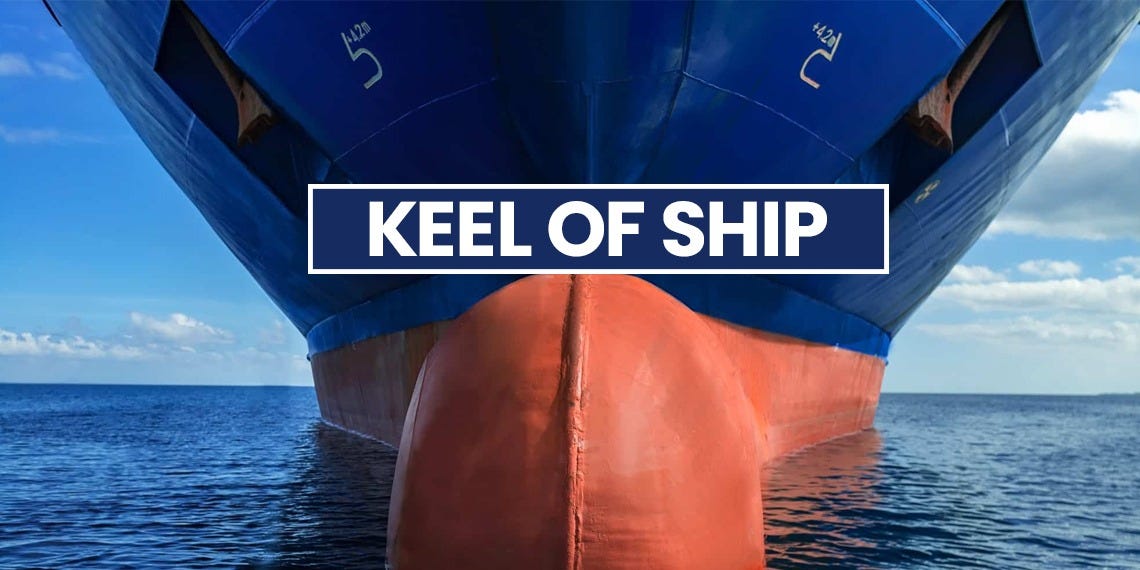
The keel is what keeps a ship stable and on course under pressure. When it fails, the ship does not gradually adjust. It goes over.
Needs to be said and you say it so clearly.
@shivam as always, your so On Pointe. I cannot express how clearly your writing empathizes with the people and the process limitations and the marketing fallacy. Another opportunity in the sustainable fashion pipeline that I experienced 1st hand as a Founder & pioneer @We Are HAH...is the % of capital going into the R&D|Science is not in balance with the capital invested in Brands who want to bring these technologies to life and make them affordable and mainstream. When I was raising capital, (never again) I pitched to many VCs backing fashion/fiber tech to bring me on board and we will bring this tech into the consumer market in a way that is aligned with the front end. VCs don't invest in both - the tech and the CPG go to market, unless the brand is built on its own proprietary tech like All Birds. If we filled this void and shared the tech we have the chance of actual consumer awareness & consumption. #startsomewhere